
Dinosaurs
Tyrannosaurus rex: the mighty predator that impresses at Dinolandia
26 May 20267 min read
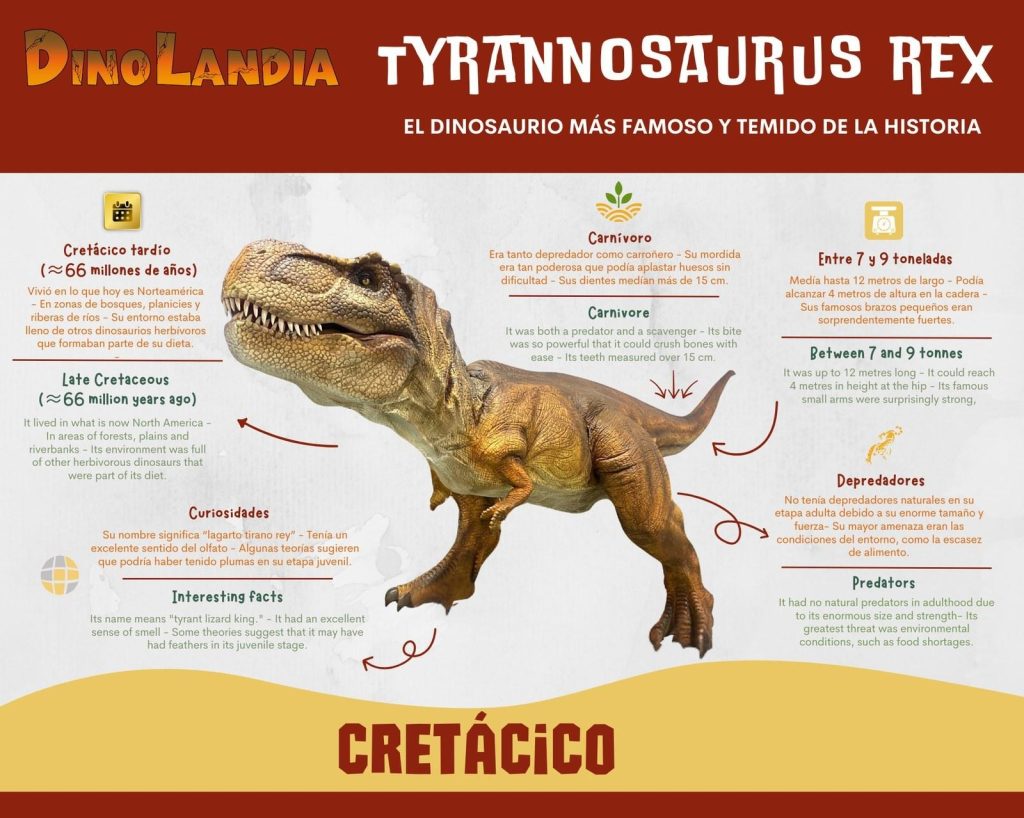
Tyrannosaurus rex was a carnivorous tyrannosaurid theropod that lived during the Cretaceous. It is a particularly interesting species because it is one of the most popular carnivores of all time and one of the stars of any prehistoric tour. Its anatomy, characterised by an enormous head, powerful jaws, large teeth, strong hind legs and short arms, helps us better understand the enormous diversity of prehistoric animals that existed before humans appeared.
Getting to know Tyrannosaurus rex at Dinolandia is a wonderful way to explore palaeontology while still enjoying the excitement of coming face to face with a large-scale recreation.
What species was Tyrannosaurus rex?
Tyrannosaurus rex belonged to the tyrannosaurid theropod group. As with many prehistoric species, its importance lies not only in its size or appearance, but also in what it tells us about Cretaceous ecosystems. Looking at its body reveals clear adaptations to its way of life: an enormous head, powerful jaws, large teeth, strong hind legs and short arms.
This type of animal helps explain that prehistoric life did not consist of just one kind of dinosaur. There were large herbivores, specialised predators, marine reptiles, flying animals and creatures with very different defences, crests or body shapes. Tyrannosaurus rex is a good example of that variety.
Main characteristics of Tyrannosaurus rex
- Period: Cretaceous.
- Diet: carnivorous.
- Physical features: enormous head, powerful jaws, large teeth, strong hind legs and short arms.
- Area associated with its fossils: North America.
- Educational value: it is one of the most popular carnivores of all time and one of the stars of any prehistoric tour.
These characteristics make Tyrannosaurus rex a very useful species for exploring educational topics with children: diet, adaptation to the environment, differences between groups and the evolution of prehistoric animals.
Where and when did Tyrannosaurus rex live?
Tyrannosaurus rex lived during the Cretaceous, and its remains are associated with North America. This historical and geographical context allows us to place it within a world very different from today's, with landscapes, climates and animal communities that changed considerably over millions of years.
Knowing the period in which Tyrannosaurus rex lived helps us put the history of life on Earth in order. Not all prehistoric animals lived at the same time: some belonged to the Triassic, others to the Jurassic, others to the Cretaceous, and some, such as certain reptiles that predated the dinosaurs, even lived before dinosaurs dominated the planet.
What did Tyrannosaurus rex eat?
Tyrannosaurus rex was carnivorous. Its diet would have included other dinosaurs and animals from its ecosystem. This information is among the most appealing for visitors because it allows them to compare species: some were adapted to cutting plants, others to chasing prey, others to living near water and others to making use of different resources.
Talking about the diet of Tyrannosaurus rex also helps dispel a very common idea: not all prehistoric animals were large predators. Many were herbivores, omnivores or specialists in very specific foods, and each played a role within its ecosystem.
Tyrannosaurus rex at Dinolandia
At Dinolandia, Tyrannosaurus rex forms part of the route through the park and allows visitors to get to know this species through a visual, family-friendly experience. The animatronic recreation helps you imagine what it would have been like to encounter a creature with these characteristics in its natural environment.
Tyrannosaurus rex infographic
The combination of an infographic and an animatronic figure makes Tyrannosaurus rex a stop designed for observing details, taking photographs and reinforcing the prominence of the species' name within the park's content.
Interesting facts about Tyrannosaurus rex
Its name means “tyrant lizard king”, a name that fits very well with its reputation as a dominant predator.
Another interesting fact is that Tyrannosaurus rex allows us to compare very different ways of life. Its body, diet and period distinguish it from other animals along the route, making it perfect for helping children learn to recognise species beyond the most famous dinosaurs.
Why get to know Tyrannosaurus rex at Dinolandia?
Getting to know Tyrannosaurus rex at Dinolandia is a simple way to turn a leisure visit into an educational experience. Visitors can observe its appearance, read facts about the species, compare it with other animals in the park and remember its name thanks to a recreation designed to attract attention.
For families, schools and dinosaur enthusiasts, Tyrannosaurus rex offers an opportunity for visual learning. It is a species that helps us talk about science in an accessible way, without losing the sense of adventure that makes a visit to the park so appealing.
Dinolandia: a prehistoric adventure for the whole family
Dinolandia brings the age of the dinosaurs closer to families through animatronic figures, information panels and an environment designed to spark curiosity. After getting to know Tyrannosaurus rex, visitors can continue exploring the park and discover carnivores, herbivores, marine reptiles and other prehistoric creatures. It is the perfect outing for turning an ordinary day into a Jurassic adventure.
Fancy seeing them in person?
Dinolandia, El Bosque Encantado and Mineralandia: three parks in one, 50 minutes from Madrid.
Buy tickets